Healthtech is not only transforming patient care but also revolutionizing hospital operations.
Through intelligent workflow tools, predictive analytics, and automation, hospitals achieve measurable improvements - from saving staff time to reducing cancelled procedures.
Key Takeaways:
- Healthtech is not just about patient care but about operational excellence across the healthcare ecosystem.
- Digital tools improve communication, resource allocation, and infrastructure maintenance.
- Real-life results from Medishout show how the right technology can dramatically reduce response times and operational friction.
- The future of healthcare efficiency lies in collaboration between medical expertise and digital innovation.
Why Operations Matter in Healthcare
When we think about innovation in healthcare, we often picture AI diagnosing diseases or robots assisting surgeries.
But there’s another, less glamorous side of the story - operations. Behind every successful hospital, there’s a complex network of processes, people, and systems that need to work seamlessly.
Unfortunately, they often don’t.
Manual reporting, fragmented communication, and legacy systems lead to inefficiencies that waste both time and resources. And when operations fail, patient care suffers too.
That’s where healthtech comes in - not as a futuristic add-on, but as a core driver of operational transformation.
How Healthtech Improves Hospital Operations
Workflow Tools in Hospitals
Workflow tools are digital platforms that automate and coordinate everyday hospital processes. They manage communication, task assignments, maintenance, and reporting - replacing manual calls and spreadsheets.
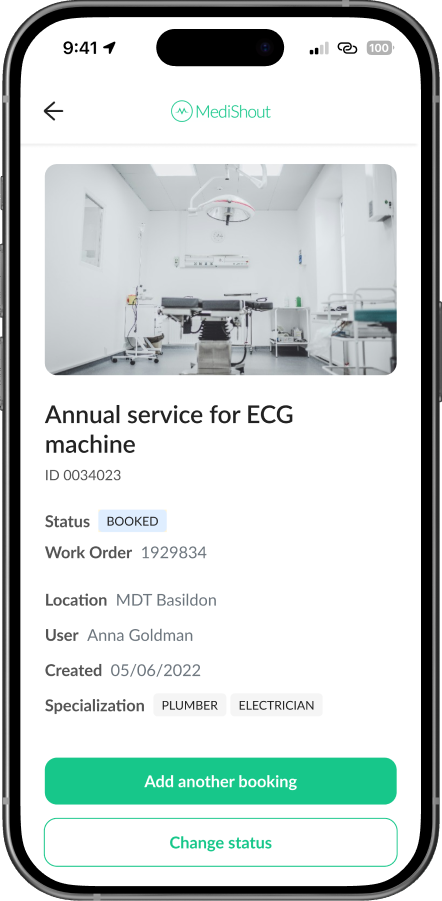
Example: Medishout’s platform built with ULAM LABS engineers enables instant issue reporting, task routing, and performance tracking.
Hospitals spend countless hours on manual documentation, reporting, and scheduling.
Modern workflow tools now reduce these repetitive tasks dramatically. A study on nursing workflow redesign found that new digital tools reduced documentation time by 10–18%, saving about 10 minutes per shift and up to 6.5 minutes per patient reassessment1, depending on the department.
This means more time for what truly matters - patient care - and less time chasing paperwork.
Smarter Resource and Infrastructure Management
Predictive analytics and smart maintenance dashboards help hospitals stay one step ahead.
Systems like Medishout centralize issue reporting and maintenance requests, eliminating the communication bottlenecks that used to cause long delays or cancelled operations.
Similarly, other platforms such as Healthray and Alcidion are improving efficiency in UK hospitals by managing bed flow, enabling real-time alerts, and reducing response times to patient condition changes.
Improving Coordination and Communication
Healthtech platforms act as a connective tissue between hospital departments.
From engineers to clinicians, everyone gets the same information in real time.
This unified communication dramatically improves response times, reduces misunderstandings, and strengthens accountability - all key to maintaining operational excellence.
Data-Driven Decision Making
Every hospital produces enormous operational data - often underused.
Modern workflow tools turn that data into actionable insights:
- Predicting equipment demand.
- Optimizing shift allocation.
- Tracking operational KPIs such as task completion time, cancellations, and readmission rates.
Case Study: Medishout - Streamlining Hospital Operations
About the Client
Medishout is a UK-based healthtech company revolutionizing how hospitals manage infrastructure and communication. Their mission: to make it super easy to report a problem in a hospital.
Before Medishout, hospitals struggled with lost maintenance requests, long delays, and miscommunication between departments.
Technology
In collaboration with ULAM LABS, Medishout built an integrated digital platform where hospital staff can instantly log issues “shouts”, from broken lights to faulty equipment, using a simple interface.
Key features included:
- Intuitive UX/UI, tailored for time-pressured staff
- Integration with existing hospital management systems
- Scalability, allowing nationwide adoption across NHS trusts
The platform automatically routes tasks to the right teams, provides live updates, and tracks completion, creating transparency and accountability across the organization.
What Results Did Hospitals Achieve?
The results are nothing short of transformative.
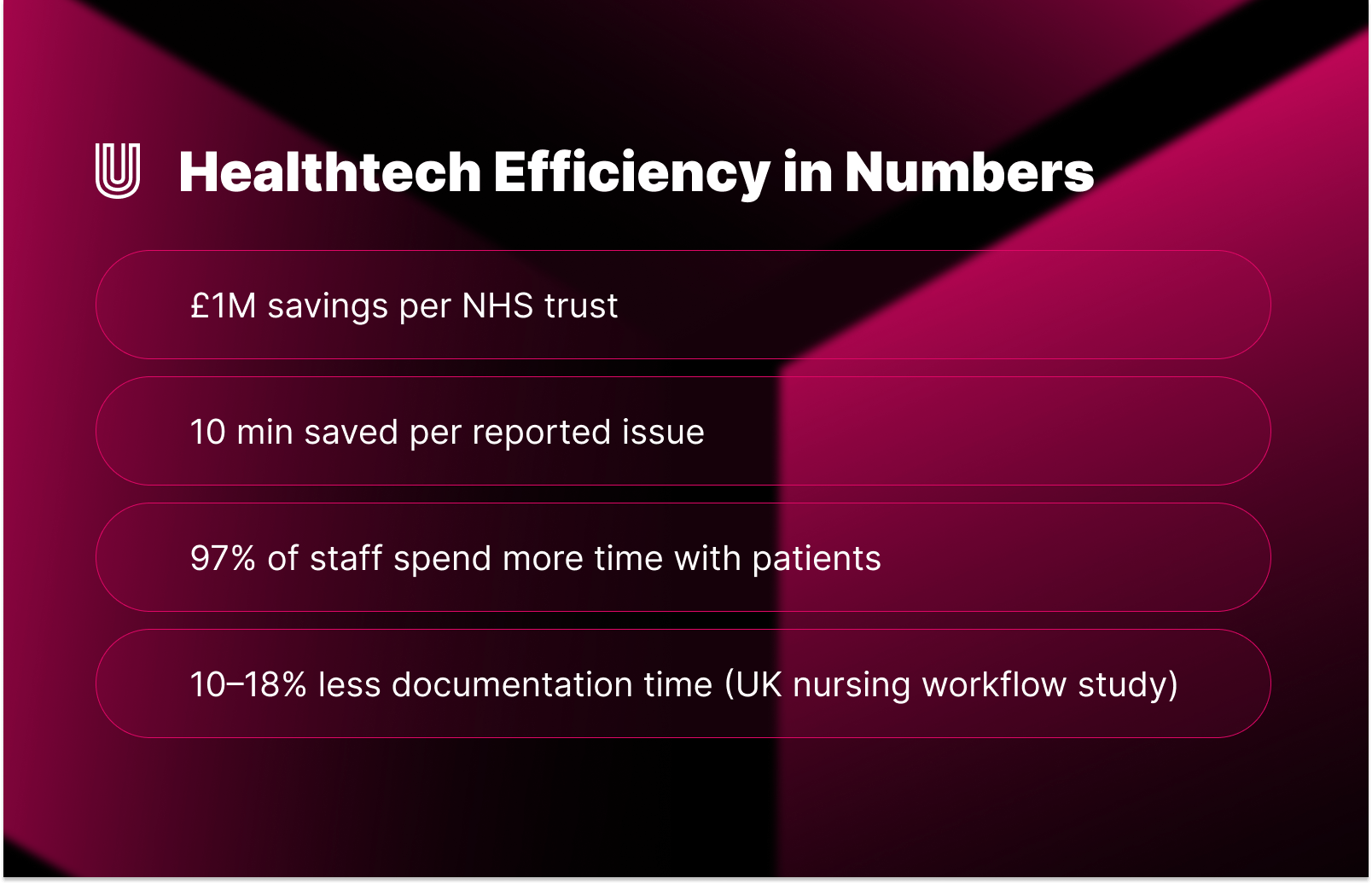
The app has delivered significant efficiency savings for hospitals, including:
- Up to £1 million per NHS trust annually2
- 10 minutes of staff time saved per reported issue
- fewer cancelled operations, directly linked to faster maintenance and issue resolution
- 97% of staff reporting they now spend more time with patients3
These are not abstract metrics. They reflect real-world improvements in patient safety, satisfaction, and overall hospital performance.
The Bigger Picture: Healthtech’s Operational Impact
Hospitals adopting digital workflow systems are seeing similar benefits.
For example, nursing workflow redesign studies show documentation time reductions of 10–18%.
Systems like Healthray improve bed flow and reduce treatment time.
Alcidion’s Clinical Workflow Suite enhances real-time communication and safety alerts - significantly lowering response times.
Other hospitals using Real-Time Location Systems (RTLS) report faster communication, optimized staff allocation, and reduced fatigue.
Together, these tools make healthcare faster, safer, and more sustainable.
Final Thoughts
We can admit that the future of healthcare operations is all about giving humans better tools.
Healthtech like Medishout shows what’s possible when empathy meets engineering: faster responses, fewer cancellations, and happier staff who can spend more time with the people who matter most - their patients.
At ULAM LABS, we’re proud to support innovators who are transforming healthcare from the inside out through building HIPPA-compliant software.
As a healthtech software development company we help to build scalable, secure, and beautifully designed products - from concept to launch. If you’re ready to transform your operations through technology, let’s talk.
Sources:
1 Nursing workflow study (2022)
2 MediShout evaluation and impact (2023-2024)
3 2025 hospital operations surveys & AI in healthcare reports, Deloitte
Frequently asked questions
What Is Healthtech’s Role in Operations?
Healthtech improves workflows, resource management, and communication — making healthcare delivery faster and safer.
What Is FHIR?
FHIR (Fast Healthcare Interoperability Resources) is the global standard for exchanging healthcare data securely.
ULAM LABS engineers use FHIR to ensure seamless interoperability across hospital systems.
How to Build HIPAA-Compliant Health Apps?
ULAM LABS Team implements encryption, access control, and auditing that meet HIPAA and GDPR standards.
How Much Time Can Hospitals Save With Automation?
Workflow tools save 10+ minutes per issue and reduce cancelled procedures by over 40%, boosting patient satisfaction and staff morale.